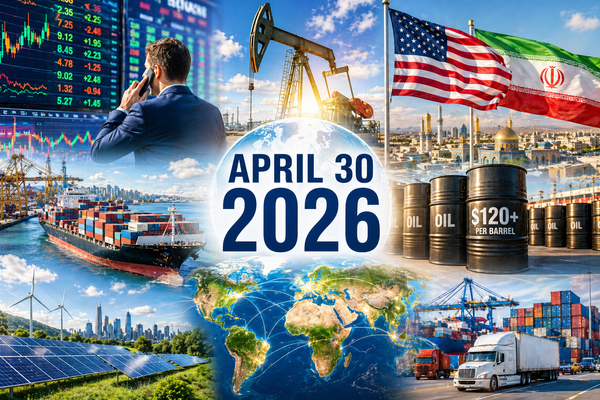
Global markets are reacting sharply as oil prices surge past $120, driven by escalating geopolitical tensions and supply disruptions. The ripple effects are now hitting inflation, trade flows, and economic stability across every major region.
Rising energy prices and geopolitical instability are triggering synchronized pressure across global markets, trade systems, and monetary policy outlooks. The signal is clear: volatility is no longer isolated—it is systemic.
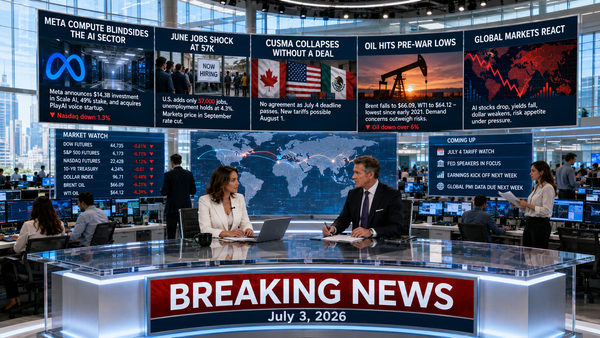
📰 WBN Breaking News – July 3, 2026: Meta Compute Blindsides The AI Sector, June Jobs Shock At 57K, CUSMA Collapses Without A Deal, And Oil Hits Pre-War Lows
📰 WBN Breaking News – July 3, 2026: Meta Compute Blindsides The AI Sector, June Jobs Shock At 57K, CUSMA Collapses Without A Deal, And Oil Hits Pre-War Lows
Global markets are reacting sharply as oil prices surge past $120, driven by escalating geopolitical tensions and supply disruptions. The ripple effects are now hitting inflation, trade flows, and economic stability across every major region.
Rising energy prices and geopolitical instability are triggering synchronized pressure across global markets, trade systems, and monetary policy outlooks. The signal is clear: volatility is no longer isolated—it is systemic.
Global markets are recalibrating as oil surges past $100 amid geopolitical escalation, while central banks, tech earnings, and trade data signal a tightening, uneven global economy.
Global markets are rapidly repricing risk as escalating US-Iran tensions, surging oil prices, and tightening financial conditions ripple across economies and supply chains.
Global markets are navigating a tightening web of tariff pressure, rising oil prices, and weakening growth signals, pointing to a synchronized strain across major economies.